The future of domestic agricultural products is in your hands.
Lotte Corporation, with the corporate message, "Aiming to create a company and products loved by as many people as possible." We cherish the desire to deliver small daily happiness, surprise, and emotion through our confectionery and ice cream. This time, Lotte's Candy Research Department has established the "Science Castle Research Grant Lotte Award" to explore new value in the ingredient "quince," which they have treasured for many years, together with next-generation researchers.
A commitment to quality ingredients is the key to a taste that has been loved for many years.
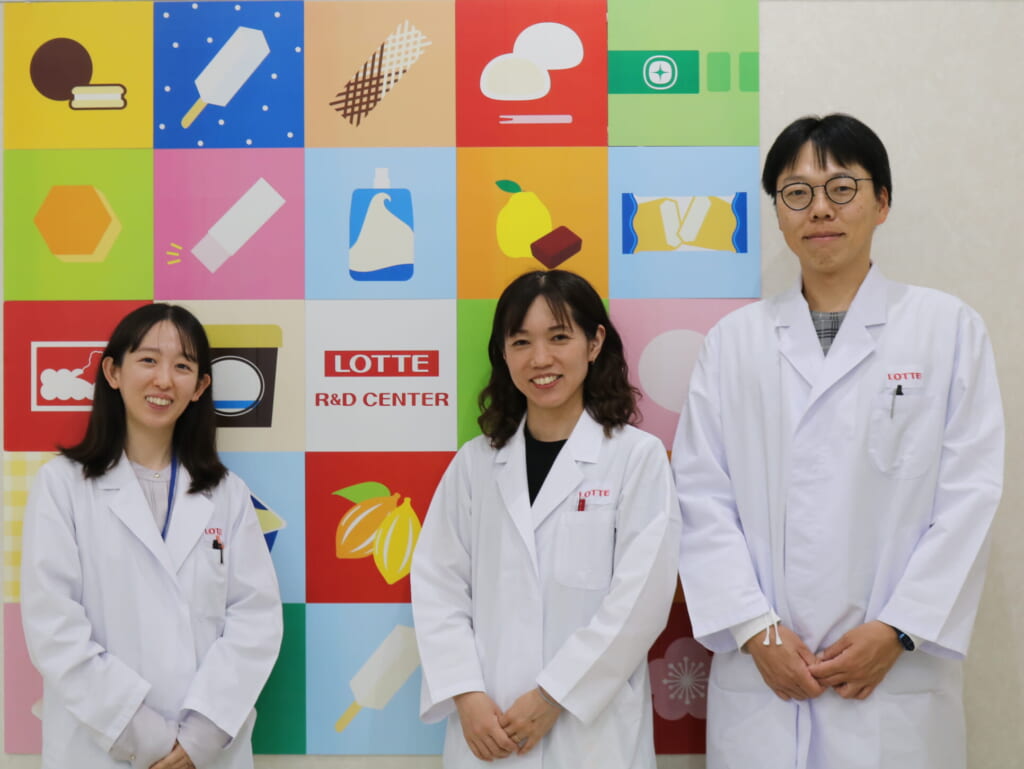
Xylitol gum, Ghana chocolate, and Yukimi Daifuku are familiar treats to everyone, aren't they? Underlying Lotte's creation of such enduring products is a strong commitment to quality, especially "deliciousness." The Candy Research Section, where Mr. Kobayashi works, pursues ingredient quality and manufacturing methods/formulations that maximize the appeal of candies that can be enjoyed for a long time, unlocking their full deliciousness. Furthermore, flavors are altered annually to keep pace with changing consumer tastes that shift with the times. One of these cherished ingredients is quince, which has been used in "throat candies" for approximately 40 years. Quince was introduced to Japan over 1000 years ago and has a history of being integrated into people's lives, having been planted as ornamental trees in gardens and enjoyed in syrup form in households. The greatest appeal of quince in candy making is its "rich aroma." Depending on ripeness, its scent can change from melon-like to tropical aromas such as peach and pineapple, and even to a fragrance that combines fruity and floral notes. To maximize this delicate aroma, Lotte collaborates with domestic farmers to use high-quality quince harvested at the optimal time. They also continue to focus on processing methods that bring out the inherent goodness of the ingredients.
I want to discover unknown value with the next generation.
Furthermore, Lotte, driven by the desire to "widely convey the appeal of quince itself to the world," boldly switched all of its quince ingredients to domestic ones with the 2022 renewal of their throat lozenges. This was because they noticed that domestic products stood out for their rich aroma and high quality compared to those imported from overseas. However, while recognizing the merits of domestically produced agricultural products, Mr. Kobayashi also encountered future challenges, such as the difficulties of quince cultivation and the shortage of successors in agriculture, during his visits to quince farmers. "I want people to know more about the excellence of Japanese quince, which is so wonderful, and I want to increase its value through new applications and pass on its appeal to the future," says Mr. Kobayashi. To realize this aspiration, they established this research fund to seek companions who would explore broader applications of quince, not just from the perspective of "quince for throat lozenges." "Quince is an example of a 'rare agricultural product' whose production volume is decreasing due to declining demand and recognition. There are many such agricultural products throughout Japan. That is precisely why we want to become a leader in initiatives to rediscover their appeal and increase their value."
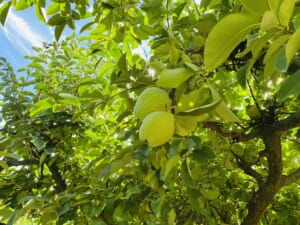
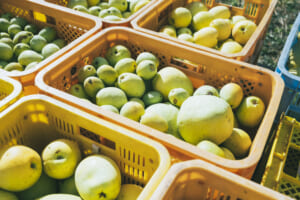
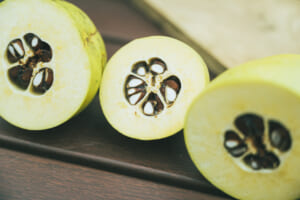
Let's research the mysterious fruit "Karin" with free thinking.
The Lotte Prize for Science Castle Research Grants is seeking "diverse research that contributes to enhancing the value of quince." Quince is a deciduous fruit tree in the rose family, a relative of apples and pears, possessing a rich, fruity aroma. However, it also has the surprising characteristic of being hard and astringent, making it inedible when raw. "It contains more than 20 times the amount of polyphenols as apples, and is rich in insoluble dietary fiber. It's a mysterious fruit with many unknown aspects and a material brimming with new potential," says Mr. Kobayashi. We encourage you to explore its potential from various perspectives, including its aroma, components, fiber, processing methods, and uses. We welcome any idea, not just those related to aroma compounds, taste, or health benefits. This could include processing and utilizing residues like its skin or pomace fiber, making it edible, or verifying its insect-repellent or antibacterial properties using its components. We hope that through discovering the new appeal and applications of quince with the free thinking unique to junior high and high school students, unbound by common sense, you will take a step towards preserving and expanding the rich culinary experiences born from Japan's rare agricultural products.


 Home
Home science
 the current fiscal year
 academic conference