
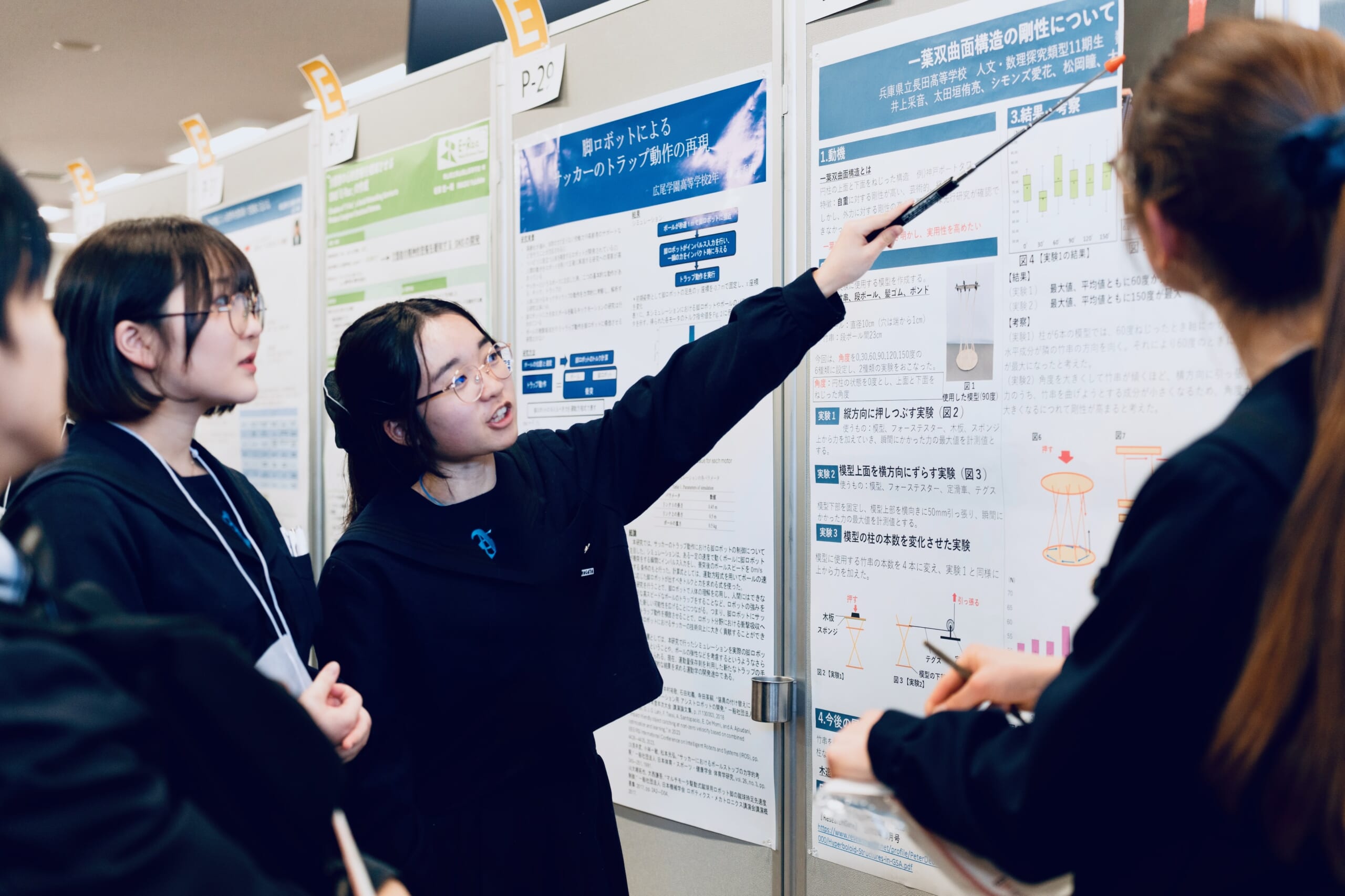
2026.06.06 [SAT].
From the South Gate of the campus, ascend the stairs or escalator, and you will arrive directly in front of the venue building.
Science Castle Japan 2026
Kansai University Senriyama Campus 100th Anniversary HallFrom the South Gate of the campus, ascend the stairs or escalator, and you will arrive directly in front of the venue building.
Greetings fellow Young Researchers from Asia!
Science Castle started in 2012 as a gateway for future researchers. While its initial focus was to provide presentation opportunities for junior and senior high school students, its role has evolved in recent years with the expansion of inquiry-based learning in schools and the increase in junior and senior high school students conducting advanced research independently. In response to these changes, we now offer more than just a platform for presentations; we create opportunities for connection with society through collaboration with companies and universities, encounters with peers who are researchers, and the acquisition of advice and support to advance research to the next stage.
The 2026 season will be held in the Philippines in January and in Malaysia/Singapore in April, with the Asian Games scheduled for August and the World Tournament for December. As part of this initiative, Science Castle Japan 2026 will bring together selected junior and senior high school researchers from across the country to create a platform for them to gain hints for the next research cycle through presentations and interactions with companies. Through this event, we aim to support the challenges of each next-generation researcher and further expand the possibilities of research.
Educational Development Division, Leave a Nest Co.
Science Castle Japan 2026
Leader Ayano Yoshikawa
April 29, 2026: Information for oral and poster presenters posted.
May 18, 2026 - Information for oral presentation judges posted.
May 20, 2026 Partner Company Information Posted.
May 28, 2026 Special Feature/Booth Information Posted. Access Information Posted.
Outline of the Event
- Event Name
- Science Castle Japan 2026
- Date and Time
- Saturday, June 6, 2026, 9:30 AM - 6:00 PM
- Abstract Submission
- Abstract submission is now closed.
- Venue
-
Kansai University Senriyama Campus 100th Anniversary Hall
From the South Gate of the campus, ascend the stairs or escalator, and you will arrive directly in front of the venue building.
3-3-35, Yamate-cho, Suita-shi, Osaka 564-8680, Japan ACCESS - Organizer
- Leave a Nest Co., Ltd.
- Participation Fee
- Presenters and observers will not be charged. Transportation and lodging to and from the venue must be paid by the individual.
- Target Participants
- Presenters, collaborators, school teachers, instructors, university researchers, partners, cooperating institutions, general visitors, etc.
timetable
*Timetable is subject to change on the day of the event.
| Venue | Program |
| 9:00 | Doors open and registration begins |
| 9:30 | opening ceremony |
| 9:50 | keynote speech |
| 10:15 | oral presentation |
| 13:15 | lunch break |
| 14:00 | Poster Presentations (first half, odd numbers) |
| 15:00 | Poster Presentations (second half, even numbers) |
| 16:00 | special project |
| 17:00 | Awards Ceremony and Closing Ceremony |
| 18:00 | closure (of a ceremony, event, meeting, etc.) |
Oral Presentation
-
A-001
 Yamagami, Miyuki (Seifu Nankai High School)
Developmental research of a novel ingestible and chewable treat based on the analysis of feline swallowing and mastication
MOREFrom experience raising a cat with Feline Immunodeficiency Virus (FIV), I realized the difficulty of continuous medication. Research revealed that cats' aversion to medication is a common social challenge for many owners. This study aims to develop a new assistive treat for medication by focusing on feline behavioral characteristics such as chewing and swallowing, creating a product that can safely enclose medication while being readily accepted by cats. In a comparative experiment using commercially available treats, we measured factors like time to swallow and number of chews. In an experiment observing eating behavior via video, we analyzed cat behavior by creating a flowchart. We also conducted a literature review and examined feline chewing and swallowing by using a 3D-printed model of a cat's head at three times its actual size. The results suggest that a structure which encloses medication within a portion of a connected disc shape may be more suitable for medication assistance than traditional structures that enclose medication in a俵型 (tawaragata - rice bale shape) or spherical form. -
A-002
 Araki, Koichiro (Kurashiki Amo High School, Okayama Prefecture)
Noise reduction in fans using propellers that mimic dragonfly wings
MOREIn this study, in order to reduce noise generated by a fan, we designed and fabricated a propeller that mimics the uneven wings of a dragonfly and evaluated its performance. In the experiment, we produced two types of propellers using a 3D printer: a propeller for a general fan and a propeller mimicking uneven wings. We then measured and compared the noise levels and average wind speeds of each. As a result, it was confirmed that the propeller mimicking uneven wings can simultaneously achieve noise reduction and increased wind speed. We will present the details of this finding. -
A-003
 Ryoko Arisue (Nishinomiya Municipal Nishinomiya High School)
The effects of plant hormones on the growth of Euglena
MOREI conducted research with the goal of promoting the growth of Euglena. Specifically, I conducted experiments based on the hypothesis that plant hormones could be used to promote growth. As a result, it was newly discovered that growth is particularly promoted at 4-5 mg/L of kinetin and 100 mg/L of gibberellin. Furthermore, it was found that Euglena possesses some of the same genes involved in plant hormone response as plants. In the future, I intend to further determine the optimal concentrations and investigate the underlying mechanisms. -
A-004
 Asumi Tsubota (Yasuda Gakuen High School)
Clarification of temperature characteristics due to phase transition of thymolphthalein crystals
MOREThymolphthalein is a type of pH indicator. In this study, we investigated the temperature characteristics and changes in thymolphthalein due to acidity and basicity through microscopic observation and power comparison. As a result, it was suggested that the steric hindrance of thymolphthalein may be related to the changes in each color. Furthermore, by microscopic observation of crystals, crystal growth surfaces were predicted using Miller indices. Regarding the temperature characteristics of the solid, a structural phase transition may have occurred. -
A-005
 Naoki Sawada (Asano Junior and Senior High School)
The Effects of Homemade Biochar on Plants and Its Application in Combating Desertification
MOREThis study aimed to utilize biochar for desertification control. Additionally, few studies have consistently evaluated the impact of biochar production and application on plant physiological activity. Therefore, we self-produced biochar from thinned wood and verified the effectiveness of our self-produced biochar in degraded soil. As a result, it was suggested that it can be a measure for desertification control, in addition to climate change mitigation measures, by improving degraded soil and enhancing plant growth rate and carbon fixation capacity. -
A-006
 Shikama Shonosuke (Dokkyo Saitama High School)
Is gas produced from the thermal decomposition of wood by sunlight combustible?
MOREFor five years, I have been researching to solve the challenges of further utilizing woody biomass fuel, such as making it into fuel without pre-treatment like drying or chipping, and unstable combustion temperatures. This time, we aimed to clarify the potential for utilization by collecting the gas that would have been flames by pyrolyzing wood using sunlight, thereby avoiding flames. Experimental results confirmed that the gas emanating from the pyrolysis section is combustible. In the future, we plan to establish a method for efficiently collecting the gas. -
A-007
 Akito Suzuki (Aichi Prefectural Kariya High School)
Research on soil improvement using ants
MOREThis study investigated the effects of ant nest-building activities on soil in terms of five items: aeration, water retention, drainage, soil nitrogen concentration, and pH. Soil with ants showed decreased aeration and pH, with the pH becoming weakly acidic, which is within the optimal growth range for many plants. On the other hand, water retention, drainage, and nitrogen concentration increased. The growth of pac choi using this soil was suggested to be more advanced compared to soil without ants. -
A-008
 Tachibana Aoi (Kanazawa University High School)
Prospects for Disaster Response Technologies Triggered by the Noto Peninsula Earthquake
MOREIn this study, we analyzed the mechanism of organic pollutant removal by diatomaceous earth for application in simple water purification devices during disasters. We hypothesized that the adsorption performance would differ among diatom species with different pore structures, and conducted batch adsorption tests using humic acid as the target substance. The results showed that physical adsorption was dominant based on PMO-f model analysis. Furthermore, FE-SEM observations revealed that the unique nanopore structure of *Nephrosterigma* contributed to high removal performance. -
A-009
 Mio Hanai (Nagoya University Education and Training Center High School)
Development Research on AI to Support the Overview of Negative Emotions through Asynchronicity
MOREFocusing on the problem of AI's excessive tuning (conformity) promoting cognitive distortions, we developed a dialogue model that effectively uses empathy and non-conformist opinions to guide negative emotions in interpersonal relationships toward an overview. As a result of an experiment in which participants conversed with the system about people they disliked, no significant difference was observed in direct emotional change. However, a significant tendency for the perceived number of shortcomings of the target person to decrease was confirmed. This suggests that conversing with the proposed model may be the first step towards AI-driven cognitive behavioral therapy. -
A-010
 Akiharu Fujita (Tokyo University of Agriculture First High School, Junior High School)
Aerodynamic Performance Evaluation of Undulating Wings by Lift-Drag Ratio and Airflow Visualization
MOREWe aim to develop an innovative wing design for personal future flying vehicles. Focusing on wavy wings, we created prototype wings with varying numbers and sizes of waves, and with or without a tail, and conducted experiments using a lift and drag wind tunnel testing apparatus. As a result, although no consistent regularity was observed for each condition, we found wavy wings that demonstrated performance exceeding existing wings. Furthermore, the generation of multiple vortices may have suppressed airflow separation on the boundary layer (wing surface), thereby increasing lift. Wavy wings were shown to be effective for high-angle-of-attack performance design. -
A-011
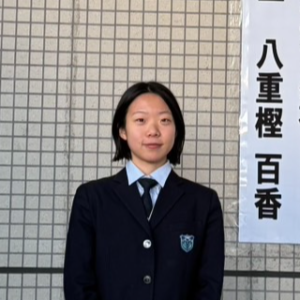 Yaegashi Momoka (Tokiwa Mats Gakuen High School)
Addressing Rwanda's Water Challenges Through the Development of Fog-Collecting Water Systems
MOREThis study investigated the impact of pore size and material of single-layer fog-harvesting nets on collection efficiency, assuming a rural Rwandan context. Comparative experiments, based on the hypothesis that reducing pore size increases effective capture area and the probability of collision with fog particles, confirmed water collection of up to approximately 49g per hour per 0.25 square meter. The expansion of the net area is estimated to secure about 10L per day, demonstrating the feasibility of its implementation as a sustainable water supply method. -
A-012
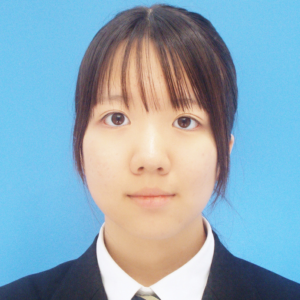 Chihiro Yoda (Shibaura Institute of Technology Kashiwa High School)
Reactivity and Stability of Methionine-Selective Modification Reagents
MOREIn chemical modification of proteins, methionine is attracting attention as a target for selective modification, and it can overcome the limitations of lysine and cysteine residues that have been conventionally used. This study investigated the relationship between the leaving group structure of N-oxycarbamate derivatives used for methionine modification and their reactivity. As a result, we clarified the reactivity and stability due to differences in leaving groups and succeeded in modifying peptides. This research provides guidelines for reagent design for future protein applications.
Poster Presentation
| Poster number | Title/Theme | identity | belong to |
| B-001 | Elucidation of survival strategies of *Nostoc commune* under low phosphorus stress | Ichihōho | Showa Gakuin High School |
| B-002 | An Exploration of the Cycle of Receiving Life: The Structure of the Jaw and the Utilization of Skin | Ainosuke Okamoto | Sumida Ward Municipal Kinshi Junior High School |
| B-003 | Quantitative analysis of the effect of changes in microbial load on the phagocytic activity of cricket hemocytes | Yamashita Natsuyo | Senri International High School of Kwansei Gakuin |
| B-004 | Habitat survey of the Japanese fire-bellied newt in Hyogo Prefecture | Yamabata Aoi-ko | Takigawa Gakuen Takigawa Junior High School |
| B-005 | Towards the conservation and regeneration of *Epipactis thunbergii* in Ariake-hama | Shun Yamamoto | Kagawa Prefectural Kanonji Daiichi High School |
| B-006 | Can Sake Lees Save the Ocean? ~The Challenge of "Circular Purification Beans"~ | Kanda Fumiya | Kobe Municipal High School of Science and Technology |
| B-007 | Ecological Study of *Rhinogobius ryukyuensis* in the Ishikawa River, Yamato River Basin | Sugito Keita | Osaka Prefectural Tondabayashi High School |
| B-008 | Dyeing flowers using food-derived pigments | Kana Sugiyama | Fukui Prefectural Wakasa High School |
| B-009 | Exploration of microorganisms that affect aquatic plant growth | Ayane Nishimura | Kagawa Prefectural Kanonji Daiichi High School |
| B-010 | The effect of spent shiitake mushroom substrate on plant germination. | Ootani Kōga | Fukui Prefectural Wakasa High School |
| B-011 | Verification of the antibacterial activity of Japanese ginger and the coloring effect of dragon fruit | Chihiro Iizuka | Tokiwamatsu Gakuen High School |
| B-012 | The symbiotic relationship between Paramecium bursaria and Chlorella | Fukui Gaishi | Nishiyamato Gakuen High School |
| B-013 | Verification of food preference and decoy effect in slime mold | Riku Saito | Seishin Gakuen High School |
| B-014 | Insect Observation Log: Life in Settsu City, Osaka Prefecture from Spring to Autumn | Sotaro Shintani | Settsu Municipal First Junior High School |
| B-015 | The Effect of Diet Type on the Sensory Properties of Mealworms | Seiya Yamamoto | Fukui Prefectural Wakasa High School |
| B-016 | Why Does "Understanding Without Being Understood" Happen? The Science of Thought Translation | Evert Aguri | Nagoya Junior High School Attached to Aichi University of Education |
| B-017 | Can pill bugs become a new research model for "pain"? | Ryoko Akutagawa | Seishin Girls' High School |
| B-018 | Does stress reduction lead to improved memory? | Umeda Shiori | Nara Women's University Secondary School |
| B-019 | Sea slug regeneration | Ena Urano | Salesian International Academy Junior High School |
| B-020 | Detection of food spoilage by chemiluminescence of luminol | Aoyama Yuta | Ritsumeikan Trust Ritsumeikan Junior High School |
| B-021 | Make dye-sensitized solar cells more eco-friendly | Eternal, forever | Meisei Junior High School |
| B-022 | Ethanol concentration measurement using cobalt chloride | Tomoyoshi Nakanishi | Nanyo High School |
| B-023 | Disaster reduction effects and optimization of high-wave protective structures through simulation | Shogo Nakata | Nishiyamato Gakuen High School |
| B-024 | Revitalization of the tourism industry in Kagawa Prefecture | Ryo Shirakawa | Kagawa Prefectural Kannonji Daiichi High School |
| B-025 | Optimization of quantitative methods for vitamin C changes associated with plasma treatment | Aina Fukunaga | Minoh Jiyu Gakuen High School |
| B-026 | How a defensive table tennis player can beat an offensive player | Soichiro Noda | Kagawa Prefectural Kanonji Daiichi High School |
| B-027 | Evaluation of Stable Rotational Properties of a Gyro Generator Based on Input Vibration Changes | Dehongguang咲 | Nishiyamato Gakuen Junior & Senior High School |
| B-028 | Changes in biotite upon heating, including potassium ion dissolution | Ryoma Haruta | Yokohama Science Frontier High School Junior High School |
| B-029 | Let's try to make a white flame with a flame test. | Sara Nishihata | Jōshō Gakuen Junior High School |
| B-030 | Rice flour blend ratio for realizing rice flour bread that doesn't harden easily | Mizuki Oshita | Fukui Prefectural Wakasa High School |
| B-031 | Computer Simulation of Underwater Mystery Circles IV | Kosuke Oishi | Hamamatsu Junior High School Attached to Shizuoka University Faculty of Education |
| B-032 | Comparison of the effects of particle size and molding method on chalk | Risana Nakayama | Fukui Prefectural Wakasa High School |
| B-033 | Analysis of shock absorption mechanisms using the dilatancy phenomenon | Mayu Nakagami | Takatsuki High School |
| B-034 | Mathematical organization and algorithms for seating arrangements | Taguchi Ryusho | Tokushima Prefectural Wakimachi High School |
| B-035 | Regularity in the binary representation of n-th Collatz numbers | Hatakeyama Kōdai | Tochigi Prefectural Utsunomiya Higashi High School |
| B-036 | Verification of melanin production inhibitory effect using potatoes | Saki Takebe | Fukui Prefectural Wakasa High School |
| B-037 | Contribution of liquid phase conditions to photocatalyst use in aqueous systems | Miyu Suzuki | Sakuragaoka High School |
| B-038 | On the values of the Riemann zeta function at positive odd integers | Chen Yi-hsuan | Osaka Kyoiku University Senior High School Ikeda |
| B-039 | Theoretical Design of Nutrient-Supplying Biodegradable Mulch | Kamegawa Kousei | Showa Gakuin High School |
| B-040 | How to prevent tape from curling when peeled off | Sojiro Ishikawa | Okayama Prefectural Kurashiki Amagi High School |
| B-041 | Investigation into the Transparency and Application of Biodegradable Casein Plastic | Daimon Aimi | Sakuragaoka High School |
| B-042 | Weeding with coffee grounds | Yurina Tsutsumi | Nishiyamato Gakuen High School |
| B-043 | Differences in how easily dust is collected depending on the angle of the dustpan | Tahara Sakuraumi | Fukui Prefectural Wakasa High School |
| B-044 | Development of a five-fingered magic hand for elderly life assistance | Sae Fujii | Nara Gakuen Tomigaoka Junior High School |
| B-045 | Strongest yogurt | red feather | Kobe Municipal High School of Science and Technology |
| B-046 | Structural Factors of Gender Gap in US-Japan Startups | Kohara Mai | Ichikawa High School |
| B-047 | I want to reduce bicycle accidents among high school students. | Sota Izawa | Kawaguchi City High School |
| B-048 | World's crop waste to SAYA, a new material derived from peas | Arisa Nagasawa | Hiroo Gakuen High School |
Show all
Oral Presentations Judges
-
 Kihoko Tokue
Leave-it, Inc. Education Research Center, Director
Doctor of ScienceMORED. in ecological research after growing up in Japan, Thailand, Singapore, Australia, and the U.S. After joining LIVERNESS in 2011, he established the International Development Division and established a Malaysia/Singapore corporation, developed TECH PLANTER and Science Castle in ASEAN, and promoted international collaboration in education and research, In October 2025, he was appointed as Director of the Education Research Center to accelerate education research and development in Asia. -
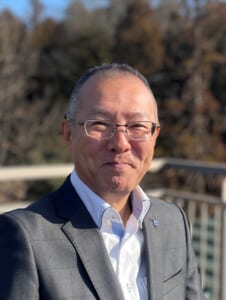 Abe Hiroshi
Asahi Beverages Co., Ltd. Senior Managing Executive Officer, Head of Research and Development, and Head of Quality Assurance
Master of AgricultureMOREA true Kyushu man, born in Fukuoka. In graduate school, I focused on "clarifying the mixing characteristics of a twin-screw extruder (a manufacturing facility for making artificial meat from soybeans)." Seeing products readily available in supermarkets today makes me reconfirm the importance of research and development. After joining Asahi Beer, I was involved in product development, technological development, and production management for soft drinks. I led the development and introduction of an industry-first aseptic filling system for carbonated beverages, making it possible to manufacture high-fruit juice and high-carbonation products that were previously impossible. This technology became the de facto standard in the industry and led to the hit of the "Mitsuya Extra Rich Series." Currently, as Asahi Soft Drinks' top technology executive, I am dedicated to research and development that realizes "100 years of excitement and smiles." -
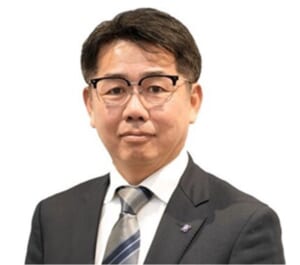 Ichiro Kato
Itoen, Ltd. Central Research Institute, Director
Master (Engineering)MOREAfter graduating from graduate school, I joined ITO EN, Ltd. I led the development of quality assurance and hygiene management systems to support food safety and reliability. I have been instrumental in evaluating the safety of beverages and tea products, establishing quality standards, and building a microbial risk management system, thereby underpinning ITO EN's quality and brand value. Starting in 2025, as the Director of the Central Research Institute, I will oversee fundamental research and research into the functional properties of green tea, driving value creation based on scientific evidence and contributing to a healthier society. My expertise lies in applied microbiology and food microbiology. -
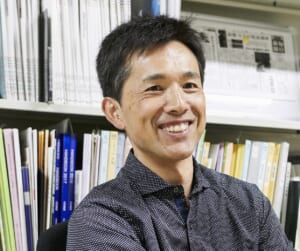 Ken Ito
Kansai University, Faculty of Engineering Science, Department of Mechanical Engineering, Professor
Doctor of EngineeringMOREGraduated from the Faculty of Science, Osaka University in 1995, and completed a Master's degree at the Graduate School of Science, The University of Tokyo in 1997. After working at the Kanagawa Institute of Industrial Technology, he obtained a Doctor of Engineering from the Graduate School of Science and Technology, Keio University in 2007. He joined the Faculty of Systems Engineering, Kansai University as an Associate Professor in 2015 and became a Professor in 2018. His specialization is Nano-Micro Science. He is researching antimicrobial materials that inhibit bacteria and viruses without the use of drugs, using "nanospike" technology that mimics the fine structures found on insect wings, and highly sensitive biosensors using DNA-derived nanostructures. From 2025, he will also be involved in the social implementation of research results as a Director and CSO of Nanospike Inc. -
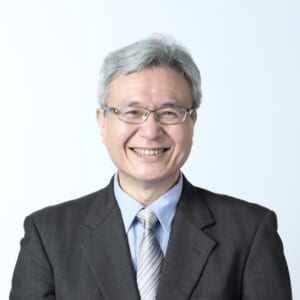 Murakami Shuji
Hiroshima Institute of Technology Vice President / Professor, Department of Electrical and Systems Engineering, Faculty of Engineering
Doctor of EngineeringMOREGraduated from Kyoto University, Faculty of Science, and completed a Master of Science in Electrical Engineering at UCLA. Holds a Ph.D. in Engineering from Osaka University. Currently a Professor in the Department of Electrical Systems Engineering at Hiroshima Institute of Technology, specializing in digital communications, particularly modulation/demodulation systems. His research focuses on advancing digital modulation/demodulation technologies that support terrestrial digital broadcasting, satellite broadcasting, smartphones, and wireless LAN, by accurately demodulating signals from radio waves that include noise, reflections, and distortion. He is also dedicated to the development of high-speed mobile reception systems, reducing power consumption in large-capacity communication systems, digital signal processing technologies, and the verification of research through a combination of simulations and prototyping, as well as the lightweight design of communication systems suitable for IoT environments. Starting April 2025, he will serve as Vice President of the university and Director of Fab Lab.
keynote speech
A senior researcher who continues to take on challenges not only in university research but also in venture companies will be a guest speaker. This keynote lecture will provide an opportunity to think about your own research and future, by touching upon their real experiences of how connecting with different fields changes the way you view research and society.
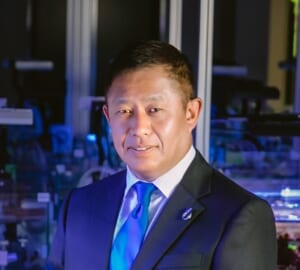
Masato Ueda
Professor, Faculty of Chemistry and Biotechnology, Kansai University
Title: From Regenerative Medicine to Coral Reefs: Research Expands by Changing Perspectives
Lecture Content: Even with the same research, changing the perspective can lead to unexpected expansions. This lecture will introduce my own research, which applies regenerative medicine engineering technology to coral reef regeneration, as an example of how exploring research in different fields has greatly broadened my own research possibilities. By not being confined to one's usual specialization and incorporating perspectives and knowledge from other fields, new ideas and connections to society can emerge. I hope this will serve as an opportunity for junior and senior high school students to consider how far their own research can expand, while being mindful of interdisciplinary connections.
special project
This society brings together junior high and high school students from across the country who are tackling research, where they present their findings. It also provides opportunities to meet various academic and corporate partners and deepen mutual learning. As part of these opportunities, we will be holding three special sessions this fiscal year. These sessions are packed with opportunities for students to take a step into the world of research, such as science experiment classes and idea generation workshops for thinking about the future. We highly encourage you to participate.
<Hours
4:00 PM - 5:00 PM
Conference Room 1Create the ultimate shiny dorodango with the power of polishing!
Planning Partner: Mypox Co.
Subject: Students
Polishing the surface of a Dorodango makes the fine clay particles align and reflect light in a certain direction, making it appear shiny and bright. Polycrystalline, soft, and spherical Dorodango is a very difficult material to polish, and in the Mipox X Challenge Program, participants will try their hand at making Dorodango by combining the skills cultivated by Mipox, a professional polisher, with the creative ideas of the participants. In a special program, participants will be able to experience the world of polishing, which is actually an active part of our daily lives, and also try their hand at polishing dorodango.
First 30 people
Second Conference RoomSpace Experiment Lab for Junior and Senior High School Students is Born! Let's Start Researching in Space!
Planning Partner: Space Gnome Research Institute Co., Ltd.
Subject: Students
If you could conduct experiments freely in space, what would you want to research? A 50-minute session exploring research themes unique to space, touching upon a cutting-edge lensless microscope scheduled for launch into space at the end of 2027. Learn from researchers' real-world perspectives and envision "future space experiments" together with your peers!
First 30 people
Main Venue:How to Utilize Leave us to Accelerate Research for Junior and Senior High School Students
Planning Partner: Riverness Inc.
Target: Students and teachers
Science Castle Research Grant is, Junior high and high school students I researchedI ! " is a research grant system that supports. In this session,Is And then, a thematic introduction by partners supporting research funding,Alumni case study presentations utilizing research grants, RespondWe will introduce methods for recruitment and points for effective utilization. further researchThose who want to deepen it. For those who want to start a new challenge, NextA project that delivers hints to help you take a step forward.
No advance registration required! All interested participants are welcome.
Booth Planning
This academic society brings together junior and senior high school students from all over the country to present their research. It also provides opportunities to meet partners from various academic institutions and companies, and to deepen mutual learning. As part of these opportunities, this year we will be holding 9 booth events. Please stop by during the poster presentation sessions!
14:00-16:00
*This is the same time as the poster presentation.
E-01:Let's start research that will create future excitement and smiles with Asahi Soft Drinks!
Planning Partner: Asahi Soft Drinks Co.
Target: Students and teachers
Asahi Drinks supports junior and senior high school students who create future excitement and smiles! We are advancing research that combines deliciousness and health through the power of science and new ideas born daily in beverage development. At this booth, we will introduce research on the recently revealed effects of highly carbonated water! Let's explore the new possibilities that expand from "drinking" while experiencing the science behind highly carbonated water!
E-02:Circulate, Deliver, Green Flow: Let's Think About Tea Research to Connect to the Future
Planning Partner: ITO EN CO.
Target: Students and teachers
Tea is not just a drink for a moment of relaxation. Through the ingenuity in how it is grown and prepared, the spirit of hospitality, and the culture of appreciating the seasons, it has nurtured the Japanese heart and wisdom since ancient times.
Why don't you explore that world of tea for yourself?
In the Reiwa era, let's build a "culture of research" together with Ito En's "Oi Ocha," where we can enjoyably learn about tea, discover new possibilities, and create new value.
E-03:The "Imabari Shipbuilding Umi-Tomo Ship Project" Co-Creating the Future of the Maritime Industry with the Next Generation
Planning Partner: Imabari Shipbuilding Co.
Target: Students and teachers
Maritime transport accounts for 99.61% of Japan’s trade volume, and this is supported by the maritime industry, including shipbuilding, marine equipment manufacturing, and shipping.Imabari Shipbuilding launched the “Umitomo Ship Project” to co-create the future of the maritime industry with the next generation. In collaboration with Lifeness, the company developed an inquiry-based program titled “The Ultimate Shipbuilding! Mega Container Ship Challenge,” which involves building a 700mm-long model ship. At this booth, we will introduce the science and educational materials featured in the program.
E-04:Welcome to the world of space research. We're seeking your research x space ideas!
Planning Partner: Space Gnome Research Institute Co., Ltd.
Target: Students and teachers
Space Gnome Laboratory will launch a miniature experimental unit equipped with a cutting-edge lensless microscope into space in 2027! We are currently seeking the next generation of researchers to collaborate with us using this experimental unit. What world-first discoveries can be made with your research x space? Won't you join us in planning experiments? We look forward to your many ideas!
E-05:Making things: Step zero, half a step, or even 0.1 of a step.
Planning Partner: THK Corporation
Target: Students and teachers
Monozukuri 0. (Zero Dot) encourages junior high and high school students to "try making it" and fosters a spirit of creativity by using everyday questions and challenges as starting points. It's a framework that connects beginners to advanced makers. At the THK booth, you can experience smooth linear motion technology and learn how to bring your own ideas to life through the development process for the "Monozukuri 0. THK Award."
E06:Let's create the future of Move with your research.
Planning Partner: Otis Elevator Company Japan, Ltd.
Target: Students and teachers
To enable people to live healthy and fulfilling lives, it is important to remove obstacles in "mobility." However, many challenges exist in achieving this. Otis, a global leader in elevators and escalators, holds an annual contest where students from around the world devise solutions to "mobility" challenges. At our booth, we will explore "What kind of future moves can we create?" based on your research themes and ideas.
E-07:Challenge the study of the sea!! Marine Challenge Program!
Planning Partner: Japan Advanced Science and Technology Education and Human Resources Research and Development Organization
Target: Students and teachers
The Marine Challenge Program supports teenagers who take on any research related to the sea and aquatic environments. This year marks our 10th anniversary, and many junior and senior high school students have tackled research projects! We welcome those who don't yet have a research topic and those who want to expand their research further! We'll introduce research ideas tailored to your interests and curiosities, and you can collect stickers by visiting recommended posters that will accelerate your research! Please share your interest in the ocean!
E-08:The "Mipox X Challenge Program" to foster the ability to connect with unknown worlds.
Planning Partner: Mypox Co.
Target: Students and teachers
In the Mipox X Challenge Program, Mipox, experts in polishing, and the creative ideas of participants will combine, as Mipox employees and junior high and high school students challenge themselves to automate the production of mud dumplings. At our booth, we will exhibit early robots and other equipment that have been improved during the program.
E-09:Accelerate your research with Science Castle research funding!
Planning Partner: Riverness Inc.
Subject:
The Science Castle Research Grant is a research grant program that supports junior and senior high school students in their desire to "research more!" At this booth, in addition to introducing the research grant, you can consult about research themes, how to use the grant, and how to apply. Why not take the first step with us to advance your research while connecting with researchers from companies and universities? If you want to connect your research to your next challenge, please stop by.
Partners
-
Asahi Soft Drinks Co. -
ITO EN Co. -

Imabari Shipbuilding Co. -
Space Gnome Laboratory Co., Ltd. -

THK Corporation -
Tokai Carbon Corporation -

Tobu Real Estate Co. -

Otis Elevator Company, Japan -
Japan Advanced Science and Technology Education and Human Resources Research and Development Organization -
Humanome Research Inc. -
Hiroshima Institute of Technology -

Mypox Corporation -
Lipidome Lab. Co., Ltd.
cooperation
-

Kansai University
Faculty of Systems Science and Engineering, Faculty of Environmental and Urban Engineering, Faculty of Chemical and Biological Engineering
Information for Participants
Online Abstracts
To view the details of the online abstract book, you will need to register for a visitor ticket.
Information for all participants
▼Transportation used when visiting
University campus parking is unavailable. Please refrain from driving microbuses and similar vehicles onto campus. If you are using a microbus, please disembark in the vicinity of the campus and then proceed to the venue.
Regarding lunch
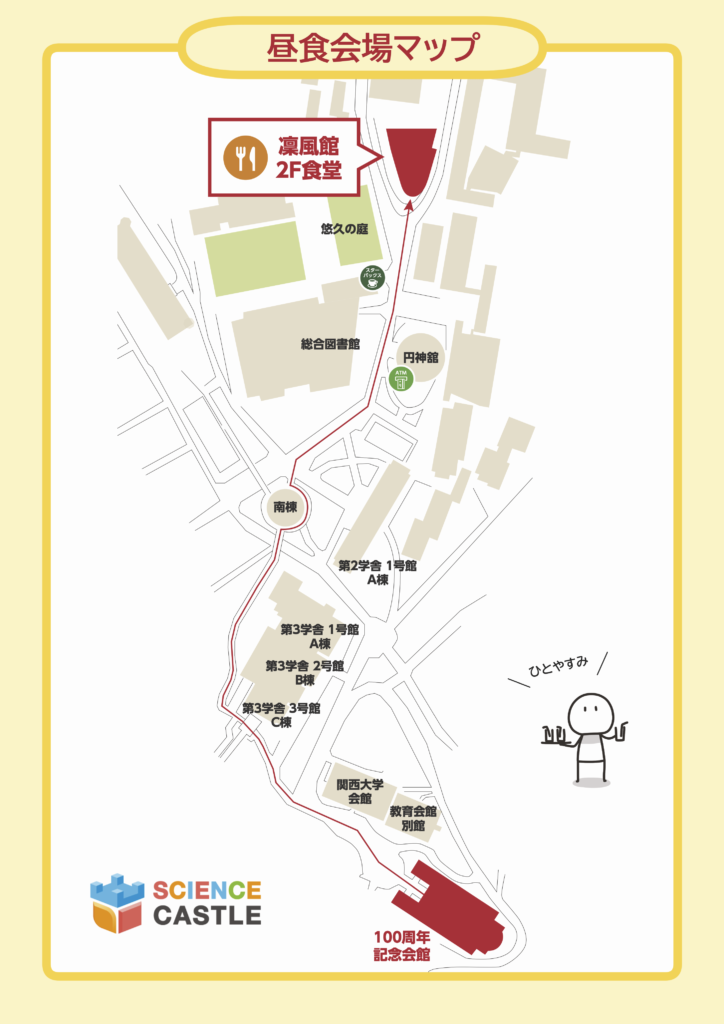
Please bring your own lunch, or plan to eat at the cafeteria or nearby restaurants.
[Cafeteria] Rinkukan, 2nd Floor, Dining Hall Dinoa (Hours: 10:00 a.m.–4:00 p.m.)
Cafeteria Maphttps://www.kandai.ne.jp/map/index.html#map01
Presenter/Exhibitor Manual
Oral and poster presenters, please be sure to check the presenter manual.
 Home
Home science
 the current fiscal year
 academic conference